Improve the productivity of your fields with an agricultural software.
Agriculture currently faces many challenges as production needs grow while resources remain at the same level. It will be necessary to produce 70% more food products by 2050. We cannot obtain more soil, however, we can use resources consciously and minimize losses.
Technology becomes a solution to these challenges by enabling us to achieve successful and profitable agricultural production by knowing the best farming practices to improve yields, controlling production costs and improving sales.
Leading companies will look to replace outdated forms of agricultural, livestock and crop management to implement business tools, Internet of Things (IoT) and artificial intelligence (AI) in order to optimize their work, achieve better planning - yield prediction and increase production capabilities.
What can you do with an agricultural management software?
With the help of agricultural software you will be able to:
Monitor crops, fields and soils.
Maintenance of facilities.
Yield and crop estimation and forecasting.
Financial management and reporting.
Resource optimization.
Personnel administration.
Risk management.
These tasks require the participation of a large number of people and therefore present challenges because the data is not centralized. With the help of software you can optimize these processes, increase accuracy and train your employees to manage their jobs more efficiently.
Moving to digital solutions will optimize management and make decisions data-driven.
Main advantages of agricultural software
1) Predictive analytics Using artificial intelligence and big data, agribusinesses and farmers can predict price changes and sell their products on a given date when rates are above average.
By having meaningful data at their disposal, these companies can make reasonable decisions. This is also true when it comes to purchasing crop nutrients.
2) Monitor crop condition Having large fields of plants limits constant monitoring of crop conditions, so new technologies need to be implemented. A simple agricultural application can track these parameters and notify farmers if nutritional balance is broken.
3) Automated irrigation systems Irrigation is an essential part of the agricultural process and can be quite costly depending on the region and the amount of water resources.
Weather conditions are a crucial aspect to be taken into account when planning irrigation. With the help of modern technologies, farmers can schedule the process, depending on the weather forecast.
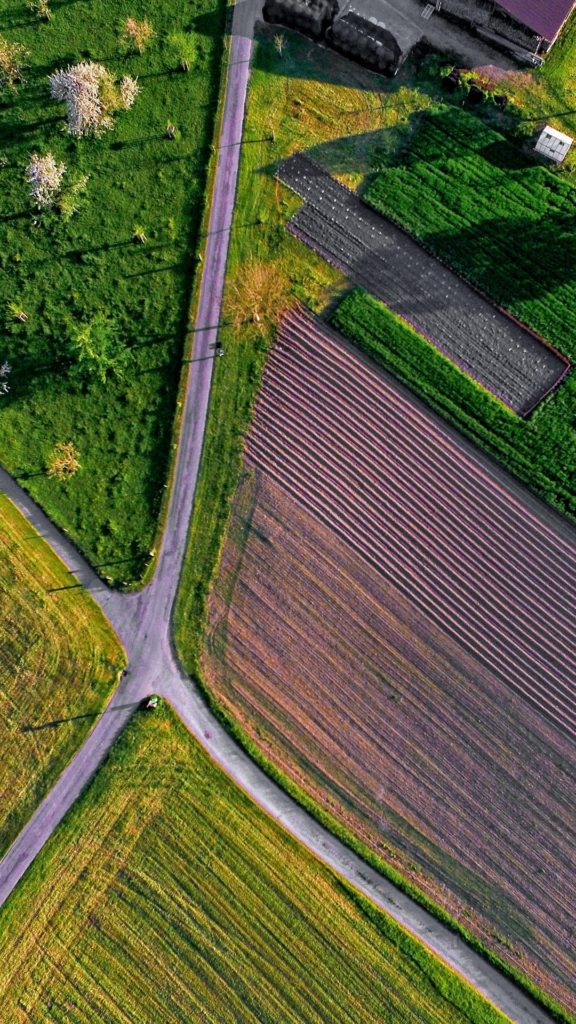
4) Drones for mapping and delivery Giant fields are difficult to take care of and require a lot of time to monitor what is happening in remote areas. Drones make it possible to monitor the whole territory and deliver small things to distant places. They can also be used to distribute fertilizers and pesticides in the field.
5) Autonomous tractors While everyone is excited about driverless cars, the agricultural sector can also use this technology. Therefore, autonomous tractors could soon appear on the market. This technology would reduce labor costs and increase efficient working hours, as the machines do not need to rest.
Ready to digitize your harvest? At Agrak we have at your disposal a team of expert advisors to help you in this process.